AI Assistant App Free

AI Assistant App Free — independent reviews, comparisons, pricing and step-by-step guides on Aizhi.

  • Parasolid

    Parasolid

    Parasolid is a geometric modeling kernel originally developed by Shape Data Limited, now owned and developed by Siemens Digital Industries Software. It can be licensed by other companies for use in their 3D computer graphics software products. Parasolid's abilities include model creation and editing utilities such as Boolean modeling operators, feature modeling support, advanced surfacing, thickening and hollowing, blending and filleting, and sheet modeling. It also incorporates modeling with mesh surfaces and lattices. Parasolid also includes tools for direct model editing, including tapering, offsetting, geometry replacement and removing feature details with automated regeneration of surrounding data. Parasolid also provides wide-ranging graphical and rendering support, including hidden-line, wireframe and drafting, tessellation, and model data inquiries. To use Parasolid effectively, software developers need knowledge of CAD in general, computational geometry, and topology. Parasolid is available for Windows (32-bit, 64-bit and AArch64), Linux (64-bit and AArch64), macOS (Apple silicon and Intel), iOS, and Android. == Parasolid XT format == Parasolid parts are normally saved in XT format, which usually has the file extension .X_T. The format is documented and open. There is also a binary version of the format, usually with an .X_B extension, which is somewhat more compact. Both .X_T and .X_B are used for parts files. == Applications == It is used in many computer-aided design (CAD), computer-aided manufacturing (CAM), computer-aided engineering (CAE), product visualization, and CAD data exchange packages. Notable uses include:

    Read more →
  • Karsten Borgwardt

    Karsten Borgwardt

    Karsten Borgwardt (born 1980) is a German computer scientist and biologist specializing in machine learning and computational biology. Since February 2023, he has been a director at the Max Planck Institute of Biochemistry in Martinsried, Germany, where he leads the Department of Machine Learning and Systems Biology. == Education and career == Borgwardt was born in Kaiserslautern. He obtained a Diplom (equivalent to a master’s degree) in computer science from LMU Munich in 2004 and a Master of Science in biology from the University of Oxford in 2003. In 2007, he obtained his PhD from LMU Munich in computer science. Following a postdoctoral position at the University of Cambridge, he became a research group leader for machine learning and computational biology at the Max Planck Institute for Biological Cybernetics and the former Max Planck Institute for Developmental Biology in Tübingen in 2008. In 2011, Borgwardt was appointed professor of data mining in the life sciences at the University of Tübingen. In 2014, he joined ETH Zurich as an associate professor in the Department of Biosystems Science and Engineering (D-BSSE) and was promoted to full professor in 2017. During his tenure at ETH Zurich, he coordinated significant research programs, including two Marie Curie Innovative Training Networks and the Personalized Swiss Sepsis Study, focusing on the prediction of sepsis using machine learning. In 2023, he was appointed as Scientific Member of the Max Planck Society and as Director at the Max Planck Institute of Biochemistry in Martinsried. == Research contributions == Borgwardt’s research integrates big data analysis with biomedical research. He develops novel machine learning algorithms to detect patterns and statistical dependencies in large biological and medical datasets. His work aims to enable the automatic generation of new knowledge from big data and to understand the relationship between the function of biological systems and their molecular properties, which is fundamental for personalized medicine. == Awards and honors == During his studies, he was a scholar of the Stiftung Maximilianeum, and the Bavarian Foundation for the Promotion of the Gifted. Borgwardt received scholarships from the Studienstiftung des deutschen Volkes in 2002 and 2007. His PhD dissertation received the Heinz Schwärtzel Dissertation Award for Foundations of Computer Science in 2007. As a professor in Tübingen, he was awarded the Alfried-Krupp-Förderpreis for Young Professors in 2013. In 2015, he received an SNSF Starting Grant. In 2014, 2015 and 2016, he was listed in “Top 40 under 40” in Germany rankings selected by Capital magazine. In 2018, Borgwardt was named among “25 individuals who have the potential to shape the next 25 years” by Focus magazine. In 2023, Borgwardt received an honorary professorship from LMU Munich by the Faculty of Chemistry and Pharmacy. Publications from Borgwardt's group have received the Outstanding Student Paper Award in NIPS in 2009, the SIB Graduate Paper Award in 2020 and SIB Remarkable Output Awards in 2020 and 2021 from the Swiss Institute of Bioinformatics (SIB). == Selected publications == Weisfeiler-Lehman Graph Kernels (’‘Journal of Machine Learning Research’’, 2011): Introduced an efficient graph kernel based on the Weisfeiler-Lehman algorithm. “Direct antimicrobial resistance prediction from clinical MALDI-TOF mass spectra using machine learning” (’‘Nature Medicine’’, 2022): showcased the feasibility of predicting antimicrobial resistance from readily collected mass spectrometry data in the hospital. The new method is able to identify antibiotic resistance 24 hours earlier than previous methods.

    Read more →
  • ISO 2033

    ISO 2033

    The ISO 2033:1983 standard ("Coding of machine readable characters (MICR and OCR)") defines character sets for use with Optical Character Recognition or Magnetic Ink Character Recognition systems. The Japanese standard JIS X 9010:1984 ("Coding of machine readable characters (OCR and MICR)", originally designated JIS C 6229-1984) is closely related. == Character set for OCR-A == The version of the encoding for the OCR-A font registered with the ISO-IR registry as ISO-IR-91 is the Japanese (JIS X 9010 / JIS C 6229) version, which differs from the encoding defined by ISO 2033 only in the addition of a Yen sign at 5C. == Character set for OCR-B == The version of the G0 set for the OCR-B font registered with the ISO-IR registry as ISO-IR-92 is the Japanese (JIS X 9010 / JIS C 6229) version, which differs from the encoding defined by ISO 2033 only in being based on JIS-Roman (with a dollar sign at 0x24 and a Yen sign at 0x5C) rather than on the ISO 646 IRV (with a backslash at 0x5C and, at the time, a universal currency sign (¤) at 0x24). Besides those code points, it differs from ASCII only in omitting the backtick (`) and tilde (~). An additional supplementary set registered as ISO-IR-93 assigns the pound sign (£), universal currency sign (¤) and section sign (§) to their ISO-8859-1 codepoints, and the backslash to the ISO-8859-1 codepoint for the Yen sign. == Character set for JIS X 9008 (JIS C 6257) == JIS X 9010 (JIS C 6229) also defines character sets for the JIS X 9008:1981 (formerly JIS C 6257-1981) "hand-printed" OCR font. These include subsets of the JIS X 0201 Roman set (registered as ISO-IR-94 and omitting the backtick (`), lowercase letters, curly braces ({, }) and overline (‾)), and kana set (registered as ISO-IR-96 and omitting the East Asian style comma (、) and full stop (。), the interpunct (・) and the small kana), in addition to a set (registered as ISO-IR-95) containing only the backslash, which is assigned to the same code point as in ISO-IR-93. The JIS C 6527 font stylises the slash and backslash characters with a doubled appearance. The character names given are "Solidus" and "Reverse Solidus", matching the Unicode character names for the ASCII slash and backslash. However, the Unicode Optical Character Recognition block includes an additional code point for an "OCR Double Backslash" (⑊), although not for a double (forward) slash, although a double slash is available elsewhere, as U+2AFD ⫽ DOUBLE SOLIDUS OPERATOR. == Character set for E-13B == The ISO-IR-98 encoding defined by ISO 2033 encodes the character repertoire of the E13B font, as used with magnetic ink character recognition. Although ISO 2033 also specifies other encodings, the encoding for E-13B is the encoding referred to as ISO_2033_1983 by Perl libintl, and as ISO_2033-1983 or csISO2033 by the IANA. Other registered labels include iso-ir-98, its ISO-IR registration number, and simply e13b. The digits are preserved in their ASCII locations. Letters and symbols unavailable in the E13B font are omitted, while specialised punctuation for bank cheques included in the E13B font is added. The same symbols are available in Unicode in the Optical Character Recognition block.

    Read more →
  • Jiliang Tang

    Jiliang Tang

    Jiliang Tang is a Chinese-born computer scientist and a University Foundation Professor of Computer Science and Engineering at Michigan State University, where he is the director of the Data Science and Engineering (DSE) Lab. His research expertise is in data mining and machine learning. == Education and career == He received his BEng in software engineering (2008) and MSc in computer science (2010) from the Beijing Institute of Technology, Beijing, China. His PhD is from Arizona State University (2015), under the direction of Huan Liu. After gaining his PhD, he worked as a research scientist at Yahoo Labs (2015–16) before joining Michigan State University as an assistant professor (2016). His research has mostly been published jointly with Huan Liu. It has received over thirteen thousand citations documented by Google Scholar, and has received coverage in the media. == Awards == He has received the 2020 ACM SIGKDD Rising Star Award that "aims to celebrate the early accomplishments of the SIGKDD communities' brightest new minds", NSF Career Award, and Michigan State University's Distinguished Withrow Research Award. == Selected publications == === Books === Jiliang Tang, Huan Liu. Trust in Social Media, (Synthesis digital library of engineering and computer science; Synthesis lectures on information security, privacy, and trust, # 13) Morgan & Claypool, 2015 ISBN 9781627054058 === Peer reviewed journal articles === Shu K, Sliva A, Wang S, Tang J, Liu H. Fake news detection on social media: A data mining perspective. ACM SIGKDD explorations newsletter. 2017 Sep 1;19(1):22-36. [1] Tang J, Alelyani S, Liu H. Feature selection for classification: A review. Data classification: Algorithms and applications. 2014:37. [2] Li J, Cheng K, Wang S, Morstatter F, Trevino RP, Tang J, Liu H. Feature selection: A data perspective. ACM Computing Surveys (CSUR). 2017 Dec 6;50(6):1-45. [3] Chang S, Han W, Tang J, Qi GJ, Aggarwal CC, Huang TS. Heterogeneous network embedding via deep architectures. InProceedings of the 21th ACM SIGKDD international conference on knowledge discovery and data mining 2015 Aug 10 (pp. 119–128) Gao H, Tang J, Hu X, Liu H. Exploring temporal effects for location recommendation on location-based social networks. InProceedings of the 7th ACM conference on Recommender systems 2013 Oct 12 (pp. 93–100). Hu X, Tang J, Gao H, Liu H. Unsupervised sentiment analysis with emotional signals. InProceedings of the 22nd international conference on World Wide Web 2013 May 13 (pp. 607–618).

    Read more →
  • T-pose

    T-pose

    In computer animation, a T-pose is a default posing for a humanoid 3D model's skeleton before it is animated. It is called so because of its shape: the straight legs and arms of a humanoid model combine to form a capital letter T. When the arms are angled downwards, the pose is sometimes referred to as an A-pose instead. Likewise, if the arms are angled upward, it is called a Y-pose. Generic terms encompassing all these (especially for non-humanoid models) include bind pose, blind pose, and reference pose. == Usage == The T-pose is primarily used as the default armature pose for skeletal animation in 3D software, which is then manipulated to create animation. The purpose of the T-pose relates to the important elements of the body being axis-aligned, thereby making it easier to rig the model for animation, physics, and other controls. Depending on the exact geometry of the model, other poses such as the A-pose may be more suitable for vertex deformation around areas such as the shoulders. Outside of being default poses in animation software, T-poses are typically used as placeholders for animation not yet completed, particularly in 3D animated video games. In some motion capture software, a T-pose must be assumed by the actor in the motion capture suit before motion capturing can begin. There are other poses used, but the T-pose is the most common one. == As an Internet meme == Starting in 2016 and resurfacing in 2017, the T-pose has become a widespread Internet meme due to its bizarre and somewhat comedic appearance, especially in video game glitches where a character's animation is unexpectedly supplanted by a T-pose. In a prerelease video of the game NBA Elite 11, the demo was filled with glitches, notably one unintentionally showing a T-pose in place of the proper animation for the model of player Andrew Bynum. The glitch later gained fame as the "Jesus Bynum glitch". Publisher EA eventually cancelled the game as they found it unsatisfactory. A similar occurrence happened with Cyberpunk 2077. In the 2023 Formula One season, driver George Russell performed a T-pose in the opening credits of the series' TV broadcasts. This quickly became a meme within the motorsports community. Russell repeated the pose after claiming pole position at the 2024 Canadian Grand Prix and winning the 2024 Austrian Grand Prix.

    Read more →
  • Michael Kearns (computer scientist)

    Michael Kearns (computer scientist)

    Michael Justin Kearns is an American computer scientist, professor and National Center Chair at the University of Pennsylvania, the founding director of Penn's Singh Program in Networked & Social Systems Engineering (NETS), the founding director of Warren Center for Network and Data Sciences, and also holds secondary appointments in Penn's Wharton School and department of Economics. He is a leading researcher in computational learning theory and algorithmic game theory, and interested in machine learning, artificial intelligence, computational finance, algorithmic trading, computational social science and social networks. He previously led the Advisory and Research function in Morgan Stanley's Artificial Intelligence Center of Excellence team, and is currently an Amazon Scholar within Amazon Web Services. == Biography == Kearns was born into an academic family, where his father David R Kearns is Professor Emeritus at University of California, San Diego in chemistry, who won Guggenheim Fellowship in 1969, and his uncle Thomas R. Kearns is Professor Emeritus at Amherst College in Philosophy and Law, Jurisprudence, and Social Thought. His paternal grandfather Clyde W. Kearns was a pioneer in insecticide toxicology and was a professor at University of Illinois at Urbana–Champaign in Entomology, and his maternal grandfather Chen Shou-Yi (1899–1978) was a professor at Pomona College in history and literature, who was born in Canton (Guangzhou, China) into a family noted for their scholarship and educational leadership. Kearns received his B.S. degree at the University of California at Berkeley in math and computer science in 1985, and Ph.D. in computer science from Harvard University in 1989, under the supervision of Turing Award winner Leslie Valiant. His doctoral dissertation was The Computational Complexity of Machine Learning, later published by MIT press as part of the ACM Doctoral Dissertation Award Series in 1990. Before joining AT&T Bell Labs in 1991, he continued with postdoctoral positions at the Laboratory for Computer Science at MIT hosted by Ronald Rivest, and at the International Computer Science Institute (ICSI) in UC Berkeley hosted by Richard M. Karp, both of whom are Turing Award winners. Kearns is currently a full professor and National Center Chair at the University of Pennsylvania, where his appointment is split across the Department of Computer and Information Science, and Statistics and Operations and Information Management in the Wharton School. Prior to joining the Penn faculty in 2002, he spent a decade (1991–2001) in AT&T Labs and Bell Labs, including as head of the AI department with colleagues including Michael L. Littman, David A. McAllester, and Richard S. Sutton; Secure Systems Research department; and Machine Learning department with members such as Michael Collins and the leader Fernando Pereira. Other AT&T Labs colleagues in Algorithms and Theoretical Computer Science included Yoav Freund, Ronald Graham, Mehryar Mohri, Robert Schapire, and Peter Shor, as well as Sebastian Seung, Yann LeCun, Corinna Cortes, and Vladimir Vapnik (the V in VC dimension). Kearns was named Fellow of the Association for Computing Machinery (2014) for contributions to machine learning, and a fellow of the American Academy of Arts and Sciences (2012). His former graduate students and postdoctoral visitors include Ryan W. Porter, John Langford, and Jennifer Wortman Vaughan. Kearns' work has been reported by media, such as MIT Technology Review (2014) Can a Website Help You Decide to Have a Kid?, Bloomberg News (2014) Schneiderman (and Einstein) Pressure High-Speed Trading and NPR audio (2012) Online Education Grows Up, And For Now, It's Free. == Academic life == === Computational learning theory === Kearns and Umesh Vazirani published An introduction to computational learning theory, which has been a standard text on computational learning theory since it was published in 1994. === Weak learnability and the origin of Boosting algorithms === The question "is weakly learnability equivalent to strong learnability?" posed by Kearns and Valiant (Unpublished manuscript 1988, ACM Symposium on Theory of Computing 1989) is the origin of boosting machine learning algorithms, which got a positive answer by Robert Schapire (1990, proof by construction, not practical) and Yoav Freund (1993, by voting, not practical) and then they developed the practical AdaBoost (European Conference on Computational Learning Theory 1995, Journal of Computer and System Sciences 1997), an adaptive boosting algorithm that won the prestigious Gödel Prize (2003). == Honors and awards == 2021. Member of the U. S. National Academy of Sciences. 2014. ACM Fellow. For contributions to machine learning, artificial intelligence, and algorithmic game theory and computational social science. 2012. American Academy of Arts and Sciences Fellow. == Selected works == 2019. The Ethical Algorithm: The Science of Socially Aware Algorithm Design. (with Aaron Roth). Oxford University Press. 1994. An introduction to computational learning theory. (with Umesh Vazirani). MIT press. Widely used as a text book in computational learning theory courses. 1990. The computational complexity of machine learning. MIT press. Based on his 1989 doctoral dissertation; ACM Doctoral Dissertation Award Series in 1990 Archived 2014-11-03 at the Wayback Machine 1989. Cryptographic limitations on learning Boolean formulae and finite automata. (with Leslie Valiant) Proceedings of the twenty-first annual ACM symposium on Theory of computing (STOC'89). The open question: is weakly learnability equivalent to strong learnability?; The origin of boosting algorithms; Important publication in machine learning.

    Read more →
  • Amazon Polly

    Amazon Polly

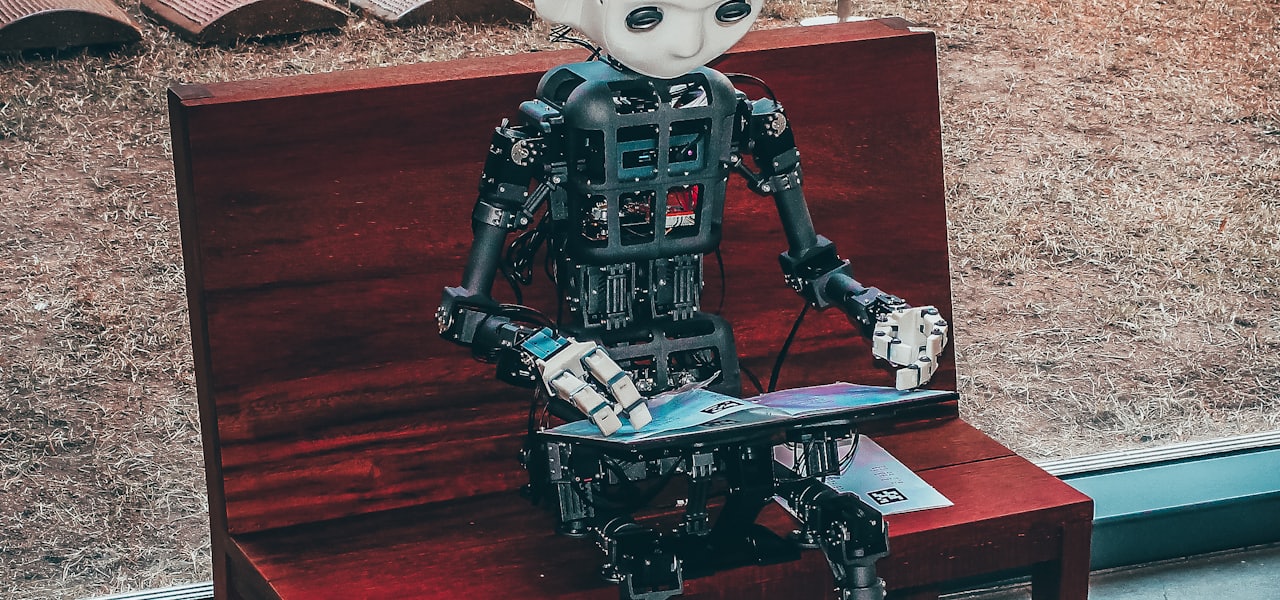
    Amazon Polly is a cloud service by Amazon Web Services, a subsidiary of Amazon.com, that converts text into spoken audio. It allows developers to create speech-enabled applications and products. It was launched in November 2016 and (as of December 2024) includes 100+ voices across 41 language variants, some of which are Neural Text-to-Speech voices of higher quality. Users include Duolingo, a language education platform.

    Read more →
  • Marti Hearst

    Marti Hearst

    Marti Alice Hearst is a professor in the School of Information at the University of California, Berkeley. She did early work in corpus-based computational linguistics, including some of the first work in automating sentiment analysis, and word sense disambiguation. She invented an algorithm that became known as "Hearst patterns" which applies lexico-syntactic patterns to recognize hyponymy (ISA) relations with high accuracy in large text collections, including an early application of it to WordNet; this algorithm is widely used in commercial text mining applications including ontology learning. Hearst also developed early work in automatic segmentation of text into topical discourse boundaries, inventing a now well-known approach called TextTiling. Hearst's research is on user interfaces for search engine technology and big data analytics. She did early work in user interfaces and information visualization for search user interfaces, inventing the TileBars query term visualization. Her Flamenco research project investigated and developed the now widely used faceted navigation approach for searching and browsing web sites and information collections. She wrote the first academic book on the topic of Search User Interfaces (Cambridge University Press, 2009). Hearst is an Edge Foundation contributing author and a member of the Usage panel of the American Heritage Dictionary of the English Language. Hearst received her B.A., M.S., and Ph.D. in computer science, all from Berkeley. In 2013 she became a fellow of the Association for Computing Machinery. She became a member of the CHI Academy in 2017, and has previously served as president of the Association for Computational Linguistics and on the advisory council of NSF's CISE Directorate. Additionally, she has been a member of the Web Board for CACM, the Usage Panel for the American Heritage Dictionary, the Edge.org panel of experts, the research staff at Xerox PARC, and the boards of ACM Transactions on the Web, Computational Linguistics, ACM Transactions on Information Systems, and IEEE Intelligent Systems. Hearst has received an NSF CAREER award, an IBM Faculty Award, and an Okawa Foundation Fellowship. Her work on user interfaces has had a profound impact on the industry, earning Hearst two Google Research Awards and four Excellence in Teaching Awards.} She has also led projects worth over $3.5M in research grants. Hearst’s publications date back to 1990, when ‘A Hybrid Approach to Restricted Text Interpretation’ was published in Stanford University’s AAAI Spring Symposium on Text Based Intelligent Systems in March of that year.

    Read more →
  • MoFA Mitra

    MoFA Mitra

    MoFA Mitra is a mobile application launched by the Ministry of Foreign Affairs of Nepal to provide digital consular services, emergency support, rescue coordination, and complaint registration facilities for Nepali citizens living and working abroad. The application allows Nepali migrant workers, students, tourists, and Non-Resident Nepalis (NRNs) to access embassy services, emergency help, and official information directly from their smartphones. == Background == The need for a centralized digital support platform for Nepalis abroad had been discussed for several years due to increasing complaints related to labor exploitation, rescue delays, documentation problems, and lack of communication with Nepali diplomatic missions. Media organizations and migrant rights advocates had continuously highlighted issues faced by Nepali workers abroad, including human trafficking, fraudulent recruitment, delayed repatriation, and difficulties in receiving emergency assistance. In response, the Ministry of Foreign Affairs developed the MoFA Mitra app to digitize complaint handling, improve communication between embassies and citizens, and make emergency response faster and more accessible. == Features == The app includes several services and features for Nepali citizens abroad, including complaint registration, rescue coordination, embassy communication, and digital consular support services. Features of the application include: Online complaint registration Emergency rescue request system Direct contact with Nepali embassies and consulates Digital consular information Passport and document-related assistance Labor and migration support information Emergency hotline access Real-time notifications and alerts Location-based embassy information Tracking and coordination support for stranded citizens According to reports, the application was designed to simplify access to diplomatic services and strengthen emergency response coordination for Nepalis abroad. == Launch == The application was officially launched by Nepal’s Ministry of Foreign Affairs in Kathmandu in May 2026. Government officials stated that the app would strengthen Nepal’s digital governance system and improve support mechanisms for Nepali citizens residing overseas. Officials said the platform would help improve communication between Nepali diplomatic missions and citizens during emergencies and rescue operations. == Reception == The launch of the app received positive coverage from Nepali and international media outlets. Commentators described the initiative as a significant step toward modernization of Nepal’s diplomatic and consular services and digital governance infrastructure. Some observers also emphasized the importance of effective implementation, rapid response mechanisms, and continuous monitoring to ensure practical benefits for migrant workers abroad.

    Read more →
  • Marcus Hutter

    Marcus Hutter

    Marcus Hutter (born 14 April 1967 in Munich) is a German computer scientist, professor and artificial intelligence researcher. As a senior researcher at DeepMind, he studies the mathematical foundations of artificial general intelligence. Hutter studied physics and computer science at the Technical University of Munich. In 2000, he joined Jürgen Schmidhuber's group at the Dalle Molle Institute for Artificial Intelligence Research in Manno, Switzerland. He developed a mathematical formalism of artificial general intelligence named AIXI. He has served as a professor at the College of Engineering, Computing and Cybernetics of the Australian National University in Canberra, Australia. == Research == Starting in 2000, Hutter developed and published a mathematical theory of artificial general intelligence, AIXI, based on idealised intelligent agents and reward-motivated reinforcement learning. His first book Universal Artificial Intelligence: Sequential Decisions Based on Algorithmic Probability was published in 2005 by Springer. Also in 2005, Hutter published with his doctoral student Shane Legg an intelligence test for artificial intelligence devices. In 2009, Hutter developed and published the theory of feature reinforcement learning. In 2014, Lattimore and Hutter published an asymptotically optimal extension of the AIXI agent. An accessible podcast with Lex Fridman about his theory of Universal AI appeared in 2021 and a more technical follow-up with Tim Nguyen in 2024 in the Cartesian Cafe. His new (2024) book also gives a more accessible introduction to Universal AI and progress in the 20 years since his first book, including a chapter on ASI safety, which featured as a keynote at the inaugural workshop on AI safety in Sydney. == Hutter Prize == In 2006, Hutter announced the Hutter Prize for Lossless Compression of Human Knowledge, with a total of €50,000 in prize money. In 2020, Hutter raised the prize money for the Hutter Prize to €500,000.

    Read more →
  • Writer invariant

    Writer invariant

    Writer invariant, also called authorial invariant or author's invariant, is a property of a text which is invariant of its author, that is, it will be similar in all texts of a given author and different in texts of different authors. It can be used to find plagiarism or discover who is real author of anonymously published text. Writer invariant is also an author's pattern of writing a letter in handwritten text recognition. While it is generally recognised that writer invariants exist, it is not agreed what properties of a text should be used. Among the first ones used was distribution of word lengths; other proposed invariants include average sentence length, average word length, noun, verb or adjective usage frequency, vocabulary richness, and frequency of function words, or specific function words. Of these, average sentence lengths can be very similar in works of different authors or vary significantly even within a single work; average word lengths likewise turn out to be very similar in works of different authors. Analysis of function words shows promise because they are used by authors unconsciously.

    Read more →
  • Lübke English

    Lübke English

    The term Lübke English (or, in German, Lübke-Englisch) refers to nonsensical English created by literal word-by-word translation of German phrases, disregarding differences between the languages in syntax and meaning. Lübke English is named after Heinrich Lübke, a president of Germany in the 1960s, whose limited English made him a target of German humorists. In 2006, the German magazine konkret revealed that most of the statements ascribed to Lübke were in fact invented by the editorship of Der Spiegel, mainly by staff writer Ernst Goyke and subsequent letters to the editor. In the 1980s, comedian Otto Waalkes had a routine called "English for Runaways", which is a nonsensical literal translation of Englisch für Fortgeschrittene (actually an idiom for 'English for advanced speakers' in German – note that fortschreiten divides into fort, meaning "away" or "forward", and schreiten, meaning "to walk in steps"). In this mock "course", he translates every sentence back or forth between English and German at least once (usually from German literally into English). Though there are also other, more complex language puns, the title of this routine has gradually replaced the term Lübke English when a German speaker wants to point out naive literal translations.

    Read more →
  • List of Ada software and tools

    List of Ada software and tools

    This is a list of software and programming tools for the Ada programming language, including IDEs, compilers, libraries, verification and debugging tools, numerical and scientific computing libraries, and related projects. == Compilers == GNAT — GCC Ada compiler and toolchain, maintained by AdaCore AdaCore GNAT Pro — commercial Ada compiler with advanced tooling for high-integrity and real-time systems Green Hills compiler for Ada — Ada compiler for embedded and safety-critical systems ObjectAda — Ada development environment for safety-critical and embedded systems == Integrated development environments (IDEs) and editors == GNAT Studio — IDE developed by AdaCore Emacs — supports Ada editing with Ada mode and syntax checking Eclipse — supports Ada through GNATbench plugin Visual Studio Code — Ada support via Ada Language Server extensions == Libraries and frameworks == See also: Ada Libraries on Wikibooks Ada.Calendar — date and time library Ada Web Services (AWS) — support for RESTful and SOAP web services Ada.Text_IO — standard library for text input/output Florist (POSIX Ada binding) – open-source implementation of the POSIX Ada bindings GNAT – Ada compiler part of GCC, which also provides an extensive runtime and library package hierarchy. GtkAda – Ada bindings for the GTK+ graphical user interface toolkit Matreshka – multipurpose Ada framework supporting Unicode, XML, JSON, and more. XML/Ada – XML and Unicode processing library == Real-time and embedded systems == Ada tasking — built-in concurrency support with tasks, protected objects, and rendezvous. Ada.Real_Time — real-time clocks, delays, and scheduling. ARINC 653 Ada profiles — for avionics real-time applications OpenMP Ada bindings — parallel programming for multi-core embedded systems Ravenscar profile — subset of Ada tasking for real-time and deterministic execution == Numerical and scientific computing == Ada.Numerics — libraries for numerical methods, linear algebra, and mathematical functions. SPARK math libraries — formal-methods-compliant numerical routines == Verification, debugging, and analysis == GNATprove — formal verification and static analysis tool for Ada and SPARK GNATstack — runtime stack analysis and checking GNATcoverage — code coverage measurement for Ada projects AdaControl — style checking and metrics for Ada == Testing frameworks == AUnit — unit testing framework for Ada GNATtest — automated testing framework for Ada == Documentation and code generation == GNATdoc — generates HTML documentation from Ada source code

    Read more →
  • Sumio Watanabe

    Sumio Watanabe

    Sumio Watanabe (渡辺 澄夫, Watanabe Sumio; born 1959) is a Japanese mathematician and engineer working in probability theory, applied algebraic geometry and Bayesian statistics. He is currently a professor at Tokyo Institute of Technology in the Department of Computational Intelligence and Systems Science. He is the author of the text, Algebraic Geometry and Statistical Learning Theory, which proposes a generalization of Fisher's regular statistical theory to singular statistical models. == Books == Mathematical Theory of Bayesian Statistics, CRC Press, 2018, ISBN 9781482238068 Algebraic Geometry and Statistical Learning Theory, Cambridge University Press, 2009.

    Read more →
  • Radford M. Neal

    Radford M. Neal

    Radford M. Neal (born September 12, 1956) is a professor emeritus at the Department of Statistics and Department of Computer Science at the University of Toronto, where he held a Canada research chair in statistics and machine learning. == Education and career == Neal studied computer science at the University of Calgary, where he received his B.Sc. in 1977 and M.Sc. in 1980, with thesis work supervised by David Hill. He worked for several years as a sessional instructor at the University of Calgary and as a statistical consultant in the industry before coming back to the academia. Neal continued his study at the University of Toronto, where he received his Ph.D. in 1995 under the supervision of Geoffrey Hinton. Neal became an assistant professor at the University of Toronto in 1995, an associated professor in 1999 and a full professor since 2001. He was the Canada Research Chair in Statistics and Machine Learning from 2003 to 2016 and retired in 2017. Neal has made great contributions in the area of machine learning and statistics, where he is particularly well known for his work on Markov chain Monte Carlo, error correcting codes and Bayesian learning for neural networks. He is also known for his blog and as the developer of pqR: a new version of the R interpreter.

    Read more →